Project
Sanjeevani
Project Sanjeevani is Koru Foundation's flagship environmental initiative, dedicated to engineering a sustainable, 'Zero-Waste City' by cultivating climate-conscious behavior and establishing circular waste systems. Operating through the three strategic pillars of Zero-Waste Schools, Zero-Waste Societies, and Zero-Waste Offices, Sanjeevani empowers citizens— particularly school youth and community leaders—to become proactive changemakers. By integrating hands-on environmental education, implementing state-of-the-art Recycle Stations, and offering affordable eco-friendly alternatives, the project successfully diverts thousands of kilograms of waste from landfills, paving the way for a greener, cleaner, and more resilient urban future.
diverted from landfill
Recycle Stations
removed in drives
goes untreated
Recycle
India's Waste Emergency
Is a Civilisational Problem
We are generating waste far faster than we can manage it. The consequences — for human health, for biodiversity, and for our climate — are compounding with every passing year.
A City-Wide Zero Waste
System
Zero Waste Schools, Zero Waste Societies, and Zero Waste Offices are self-sufficient hubs of sustainability. With dedicated resources and engaged stakeholders, they serve as pillars of change within a city — collectively driving the journey towards a cleaner, greener future. Together, they form the building blocks of a city's sustainable transformation, demonstrating that every small step contributes to a more eco-conscious urban environment.
Maximise resource recovery through environmentally and economically sustainable programmes — ensuring materials are recycled or composted rather than discarded.
Sensitise communities and drive persistent behavioural change across educational institutions, residential localities, and commercial centres.
Establish rigorous monitoring and supervision processes to ensure accurate data collection and measurable impact analysis.
Where Change Happens
Zero Waste
School & College
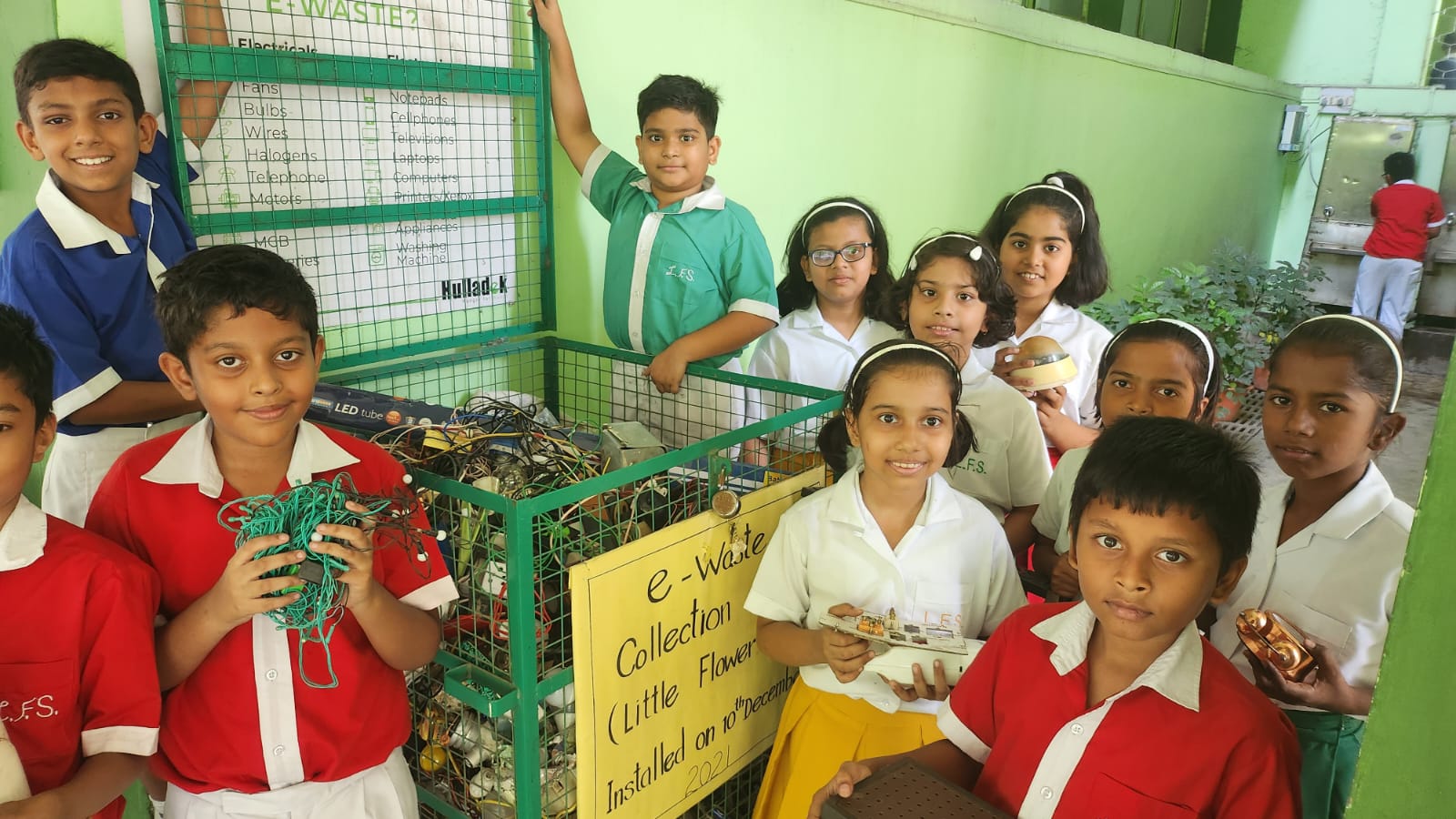
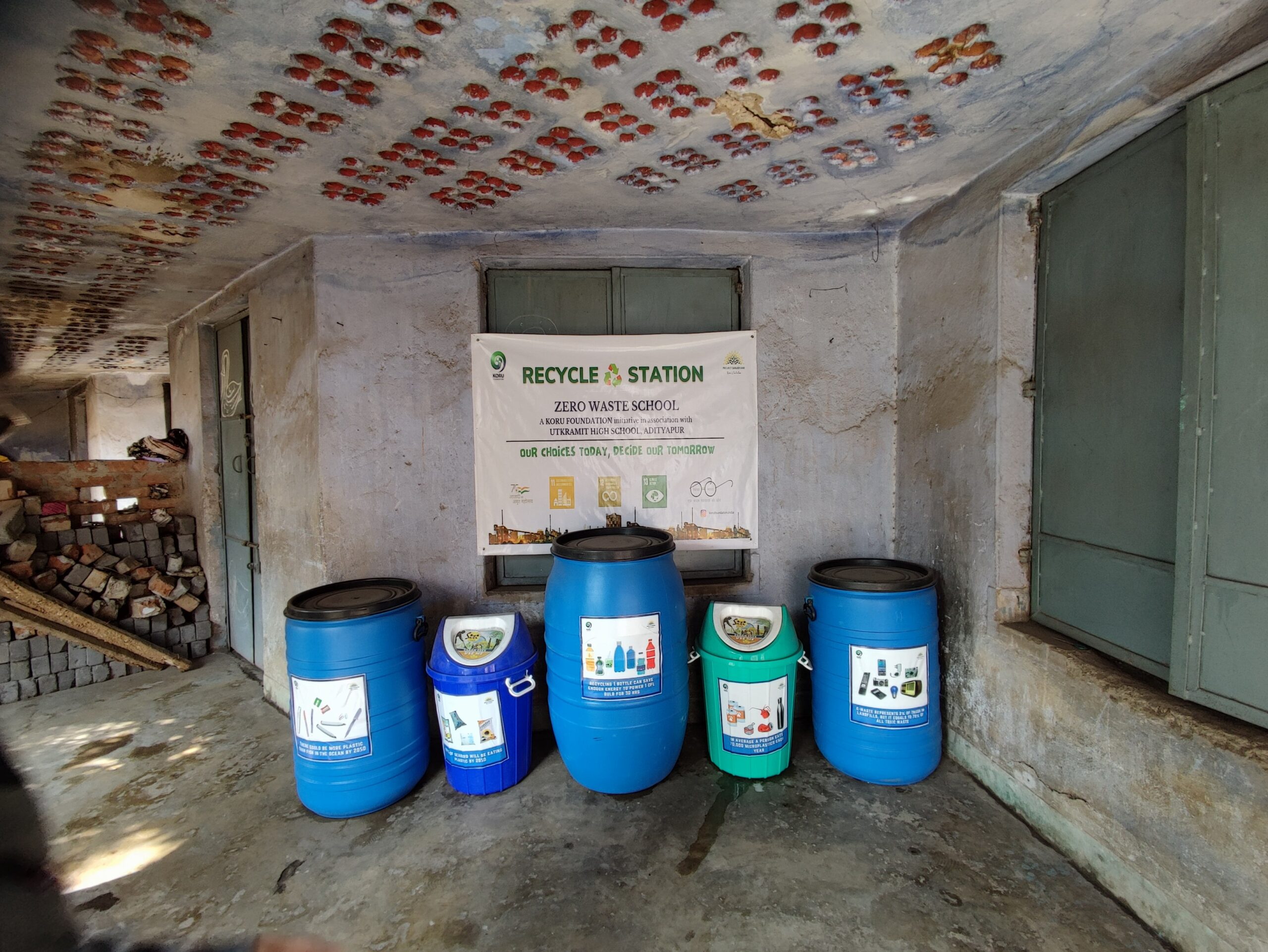
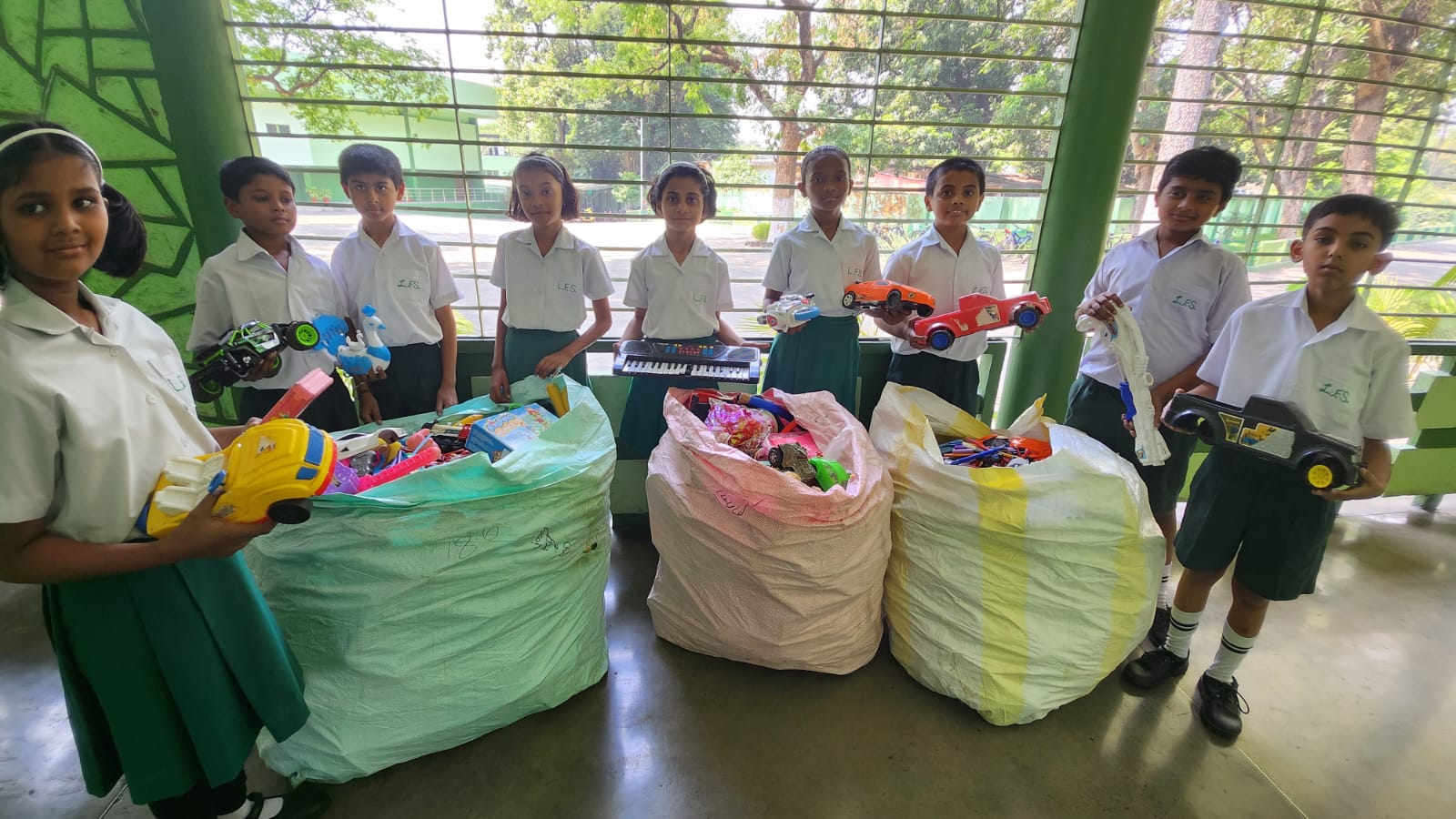
To build on our pilot programme, we have established Recycle Stations in nine schools and colleges — purpose-built collection points that divert recyclable materials before they ever reach the landfill. With the school's active support, students bring sorted waste on scheduled collection days. Our team visits bi-monthly to channelise the collected recyclables to their respective vendor networks.
The station handles six distinct waste categories: PET plastic bottles, other plastics (HDPE and LDPE), stationery items, oil and milk packets, multi-layer plastic (MLP), metal cans, and electronic waste. Each category has a dedicated bin and a clear disposal pathway — nothing is mixed, nothing is lost.
More profoundly, this is a behavioural change programme. It begins with enabling young minds to see themselves as responsible, aware citizens. We recognise that the youth who inherit this world are more likely to solve its problems than those who created them — and this conviction shapes every session we run. We have entered MoUs with Kerala Public School Kadma, Kerala Public School Gamharia, and Kerala Public School Mango.
— Lakshmi Ravunniyarath, Director Academics, Kerala Public School
Zero Waste
Society
We believe residential areas — societies, wards, and panchayats — are the second great pillar on which a Zero Waste City stands. These are the spaces where daily life happens, where habits are formed, and where the largest volume of household waste is generated. Working at this level allows us to implement and streamline sustainable waste management at the source.
Through this initiative, we promote source segregation, conduct awareness sessions on safe and hygienic handling of waste, and embed the 3R principles — Reduce, Reuse, Recycle — into cooperative housing societies and localities. Our vision is a system where every home separates dry waste, wet waste, and sanitary waste at source — making proper disposal a best practice, not an afterthought.
When waste is sorted at the household level, its onward journey — to composters, recyclers, and authorised disposal facilities — becomes clean, efficient, and complete. This is how we envision a cleaner, greener urban environment: not through top-down mandates, but through community ownership. In 2023–24 alone, partner societies composted 54,700 kg of wet kitchen waste and diverted 21,900 kg of dry waste.
— Anoop Sinha, Secretary, Sahara Garden City
Zero Waste
Offices
The third pillar of the Zero Waste City completes the framework. Commercial establishments — restaurants, offices, and local businesses — are among the city's most consistent waste generators, yet are often the least integrated into formal waste systems. Sanjeevani partners directly with these outlets to close that gap.
Rather than routing waste through informal or unregulated channels, partner outlets segregate their dry and plastic waste at source, and Sanjeevani directly channelises it to authorised recyclers — the same direct-to-vendor model used at our school Recycle Stations, adapted for commercial volumes.
The programme began with a founding cohort of restaurants in our first operational year, and reflects our conviction that a Zero Waste City is only complete when every category of waste generator — institutional, residential, and commercial — is accounted for.
Dignity for
Frontline Workers
Behind every cleaner street and every diverted tonne of waste are frontline workers — sanitation workers, rag pickers, and waste handlers — who perform some of society's most essential labour in conditions that are often unsafe, unrecognised, and undignified. Project Sanjeevani holds a firm belief: a sustainable waste system cannot be built on their exploitation.
Through this strand of our work, we are building systems that bring dignity, safety, and formal recognition to the lives of waste workers. This includes integrating them into organised collection and segregation networks, ensuring they have the right equipment and protection, and advocating for their recognition as an indispensable part of India's environmental infrastructure.
When frontline workers are empowered, the entire cycle of waste management becomes more effective. Their knowledge of waste streams, local geography, and community behaviour is irreplaceable. Respecting that knowledge is not just an ethical imperative — it is a practical necessity for any city serious about achieving zero waste.
From Pilot to Movement
Sanjeevani has grown from a single Earth Day pilot in Jamshedpur into a city-scale programme working alongside Municipal Corporations. Here's the progression, year by year.
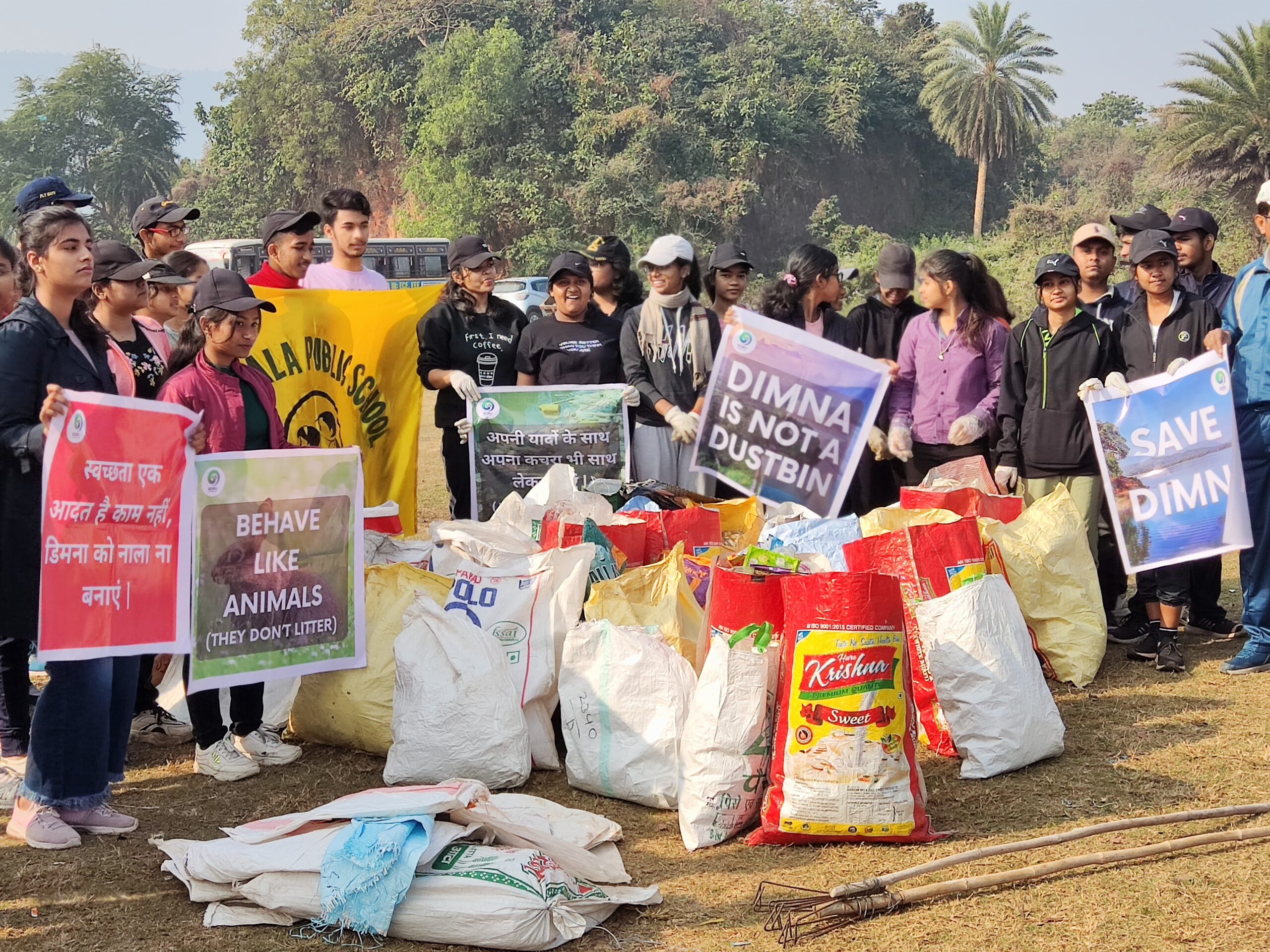
Our community cleaning drives have removed staggering quantities of litter from India's natural spaces — rivers, forests, and public lands. Each drive builds not just a cleaner environment, but a more responsible community that takes pride in its surroundings.